Gen Z needs to work together to protect our Oceans
The ocean covers 71% of the Earth and contains 97% of the world's water. 15 percent of the world’s high quality protein comes from the ocean and is often the only source of protein for 1 billion people. Not only do the ocean’s provide the world with food resources but the oceans are also responsible for controlling the world’s climate. As the ocean’s heat up, so does the rest of the world. The ocean's major gyres, which are circulating ocean currents, take warm water from the equator and cold water from the poles and circulate around the world.
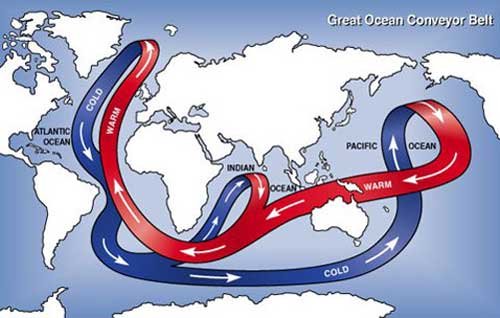
So climate change is a result of the world’s oceans heating up. The oceans are heating up from carbon emissions due to the fact that it is the world’s largest carbon sink. When carbon dioxide goes into the ocean, it dissolves by combining with H2O and making a carbonic acid. This acid then breaks into hydrogen ions (H+) and bicarbonate ions (HCO3-). This causes competition for the making of calcium carbonate ions as the carbonate ions bond with hydrogen instead of calcium. Phytoplankton and zooplankton are at the base of the food chain and rely on calcium carbonate to build their bodies. Not only are they the base of the food chain, but they are also responsible for 70% of Earth's oxygen. They produce oxygen through the process of taking carbon dioxide out of the ocean. If these organisms populations depleted at a significant rate, not only would the whole ocean ecosystem suffer but so would the rest of Earth as oxygen levels would be depleted. Organisms like shell builders and coral reefs also rely on calcium carbonate to survive.

Coral reefs are more then just pretty ecosystems that attract tourism. Coral reefs may only cover 0.17 percent of the sea floor but it is still a habitat that 25 percent of all marine species rely on. Coral reefs are nurseries and breeding grounds for these fish species and is considered to be the world's most bio diverse environment. Coral reefs have a symbiotic relationship with zooxanthellae which are tiny plants that live within the coral and are responsible for photosynthesis and providing the plants with proper nutrients. Coral reefs are also important for preventing erosion from storms, protecting shores from storm surge, as well as a source of new medicines and recreation. They also provide areas for creating fisheries. "The latest reports state that as much as 27 percent of monitored reef formations have been lost and as much as 32 percent are at risk of being lost within the next 32 years" (Mapping the Decline of Coral Reefs)". Sea levels will continue to rise and once thriving coastal areas could be underwater if sea temperatures continue to rise and ice caps continue to help.
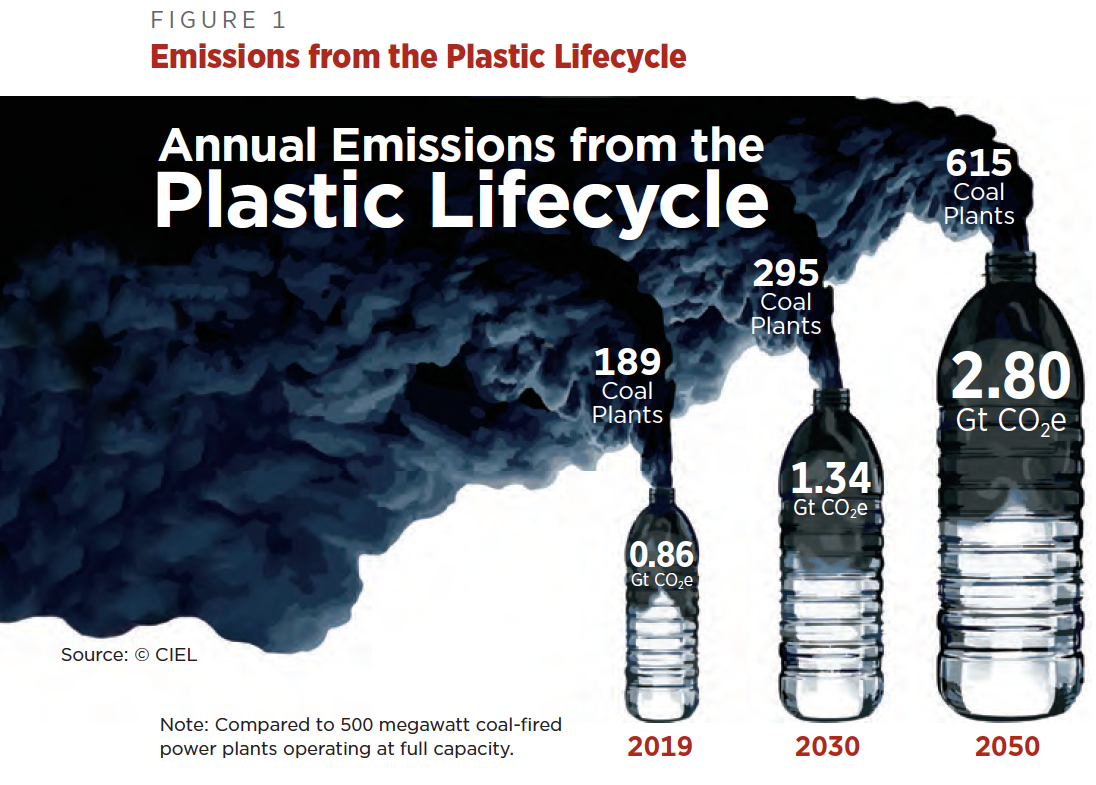
By 2050, it is predicted that there will be more plastic than fish in the oceans. "In 2019, the production and incineration of plastic will produce more than 850 million metric tons of greenhouse gases--equal to the emissions from 189 five-hundred-megawatt coal power plants. By 2050, annual emission could grow to more than 2.75 billion metric tons of CO2e from plastic production and incineration" (Plastic & Climate: The Hidden Costs of a Plastic Planet).
Gen Z has to work together to find solutions to these problems and to help lower and prevent these possible effects. If something is not done now the world for future generations will look very different. Our world could reach a point where we are unable to fix the problems that we have caused. We have to find renewable eco-friendly resources for energy and lower the amount of carbon emissions. We have to clean up ocean plastics and stop making single use plastics. We have to work together to fix what past generations have done so that future generations, our children and grandchildren and more, a world to look forward to. A world with plentiful marine life, healthy ecosystems, lower greenhouse gas emissions, lower effects of climate change, and thriving coral reefs. If the proper laws and regulations are put into place and enforced, the Earth will become a better place and marine life can recover and grow. We have to act now before it is too late, the world can not wait anymore and we have to take responsibility for our actions.
Works Cited:
“Ocean Acidification.” Ocean Acidification | National Oceanic and Atmospheric Administration, Apr. 2020, www.noaa.gov/education/resource-collections/ocean-coasts-education-resources/ocean-acidification.
“Plastic & Climate The Hidden Costs of a Plastic Planet.” CIEL, Center for International Environmental Law, May 2019, www.ciel.org/wp-content/uploads/2019/05/Plastic-and-Climate-Executive-Summary-2019.pdf.
Sanjayan, M. “What Oceans Provide.” HuffPost, HuffPost, 7 Dec. 2017, www.huffpost.com/entry/world-ocean-day_b_872770.
Tucker, Jessica. “5 Types of Sea Life Affected by Ocean Acidification.” One Green Planet, One Green Planet, 18 Dec. 2014, www.onegreenplanet.org/animalsandnature/types-of-sea-life-affected-by-ocean-acidification/.
“Value of Corals: Coral Reef Systems.” Scripps Oceanography, Scripps Institution of Oceanography, scripps.ucsd.edu/projects/coralreefsystems/about-coral-reefs/value-of-corals/.
Weier, John. “Mapping the Decline of Coral Reefs.” NASA, NASA, 12 Mar. 2001, earthobservatory.nasa.gov/features/Coral.
Comments
Post a Comment